Why AI assistants miss small local businesses, and what to fix this week
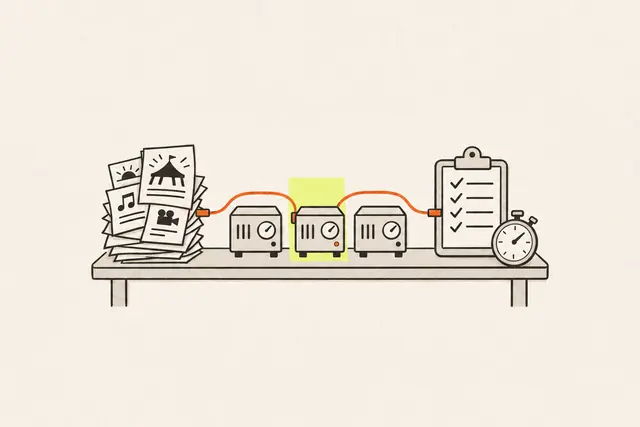
Assistants recommend what they can read. After reading 1,379 Philadelphia sources for Tailend, here is what makes a small business easy or hard to find, and the fixes that matter most.

A parent stands in the kitchen with a snack in one hand and a phone in the other. Their kid wants to try an art class this weekend, so they ask an assistant for something nearby. It gives them the same familiar names again.
Three streets away, a small pottery studio is running a beginner class. The details are in a PDF on an old page. That studio is real and its regulars love it. To a stranger, or to an assistant trying to answer a quick question, it is close to invisible.
We see this from the other side. Tailend, our events API, reads 1,379 Philadelphia sources so that assistants and apps can find small local places. Some businesses are easy to read. Many are not, and the reasons repeat.
Assistants recommend what they can confirm
An assistant needs a few plain facts before it will suggest a place: what is offered, who it is for, where and when it happens, and what to do next. If any of those is missing, or the facts disagree with each other, the safe move is to suggest somewhere else.
Having a website does not mean those facts are easy to find. On the sites we read, the answer is often in a poster, a caption or an attachment. People who already know the business fill in the gaps from memory. A stranger cannot, and neither can software.
The patterns that hide a business
These come up again and again in the sources Tailend reads:
- The details only exist in an image or PDF. A flyer is a great way to get noticed. It is a poor place to keep the only copy of the date and price.
- The latest news is only on social. A post saying “this Saturday!” is out of date by Sunday, and the website still says nothing.
- Two pages disagree. The hours page says close at five, a newer notice says seven on Thursdays. Which one should anyone trust?
- Nothing says when it ends. A weekly class with no end date looks the same in March as it did in September.
What to fix this week
Pick the one class, service or event you most want new people to find. Then:
- Give it one stable page. Keep the flyer and the social posts if they help, but point them to the page.
- Write the facts as plain text. Name, who it is for, where, when, price and how to sign up. For example: Autumn Art Club, ages 6 to 9. Wednesdays 4 to 5pm through November. Materials included. Register on this page.
- Put current hours in one place. If something is temporary, say so and say until when.
- Make the old pages agree. You do not have to delete old announcements. A stranger just needs to be able to tell which detail to trust.
Then read the page as someone who has never heard of you.
What we do on client sites
This is a big part of what we mean by agentic search. When we build or fix a site, every offering gets its own page with its facts in plain text. We add structured data such as schema.org markup, which carries the same facts in a form software can read, and keep it in step with the visible page. We also check how the business shows up today on Google and in AI assistants before we change anything, so you can see what moved.
None of it is a trick. A quiet pottery studio does not need to be famous. It needs to be readable. If you want to know how your business looks to an assistant right now, send us your site.