One problem, three products: how TinyJawns, Tailend and Yomi fit together
We started with a family guide for Philadelphia. The data work behind it became an events API, and that API now feeds a calendar app. Here is how one job turned into three products.
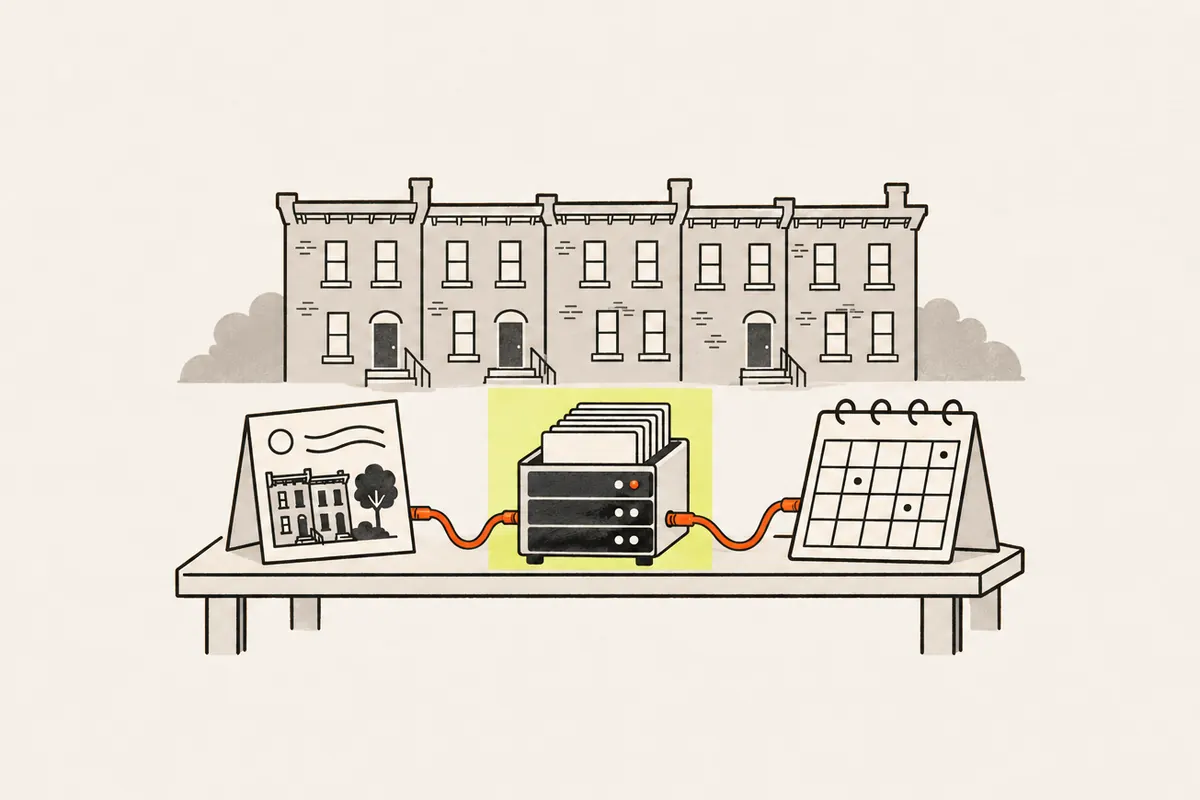
One Saturday, an artist market in a converted school building in South Philly was missing from our list. It had a crowd, folding tables of handmade things and a loyal group of neighbors. Its calendar lived inside a widget on its website. A person could read it. Our tools could not.
At the time we were running TinyJawns, a guide to things to do with kids in Philadelphia. Missing that market was a small thing. It kept happening, though, and each miss had the same cause. That cause is why we now run three products instead of one.
It started as a website and a newsletter
TinyJawns is a website and a weekly newsletter for Philadelphia parents. Picking good outings is the easy part. The hard part is everything before that: finding the events at all, reading each one correctly, and knowing it is still on by the weekend.
Local information does not live in one tidy place. It lives on flyers photographed and posted to a page, in calendar widgets, in booking portals that each have their own layout, and in social posts that are gone in two days. Nobody is doing anything wrong by publishing this way. It is how a busy organizer tells their neighbors what is happening.
So we did that work by hand for a while. Then we started building tools to do it for us.
The tools became Tailend
The tools grew into Tailend, a local events API. Today it covers Philadelphia: 7,200+ active listings from 1,379 sources. Three pieces do most of the work.
- Finding and reading. An AI pipeline we built finds events and reads each one from its source, whether that is a page, a flyer or a calendar widget, into the same consistent shape.
- Ranking. A ranking model we trained ourselves decides which events come first, so a family sees a few good options instead of everything.
- Checking again. Listings are checked again as their dates get closer. The version of an event a family acts on is the week-of version, so that is the one we work hardest to get right.
The lesson that cost us the most: reading a messy page is one problem, and knowing you read it correctly is a bigger one. A date that is off by a week looks exactly like a date that is right. We built Tailend to say plainly when it is not sure, because a confident wrong date sends a family to an empty parking lot.
Tailend now powers TinyJawns
Once the data was solid, TinyJawns stopped being a hand-built list. Its listings now come from Tailend. The newsletter still has a person’s taste in it. The finding, reading and checking happen underneath.
That is also why Tailend is its own product. Assistants and apps that families use have the same problem we had. They tend to recommend the same few famous places, because those are easiest to read. Tailend gives them the small, current, nearby things instead.
Yomi puts it on the family calendar
Yomi is the newest piece. It is an outings calendar for families: it adds a few good outings for the kids to the calendar app a family already uses. It only picks events that were checked recently and that suit the kids’ ages. Yomi is invite-only for now, and it comes with an animated character we made in Rive.
Yomi did not need its own data operation. It is a new screen on top of work that already existed.
What this means if you run a business
None of this was planned as three products. We had one job we were doing by hand every week, and we built a tool to do it. The tool turned out to be the valuable part. After that, each new product was mostly a new way to show what the tool already knew.
Most small businesses have a job like that: something staff do by hand, every week, that never quite gets easier. Scheduling, quoting, sorting an inbox, keeping a list current. The first version is usually a small internal tool. Sometimes it stays one. Sometimes it becomes the thing you sell.
That is our favorite kind of work. If you have a job like that, tell us about it.